express nosings logo web
£0.00 0

Basket

No products in the basket.

Free Shipping

Spend £300 or more

Safe Checkout

Encrypted and secure

Free Samples

Just pay for shipping

5 Star Reviews

Reviews.io trusted site

Carpeted Stairs, Laminate or LVT Landing: How to Finish the Top Step (DIY Options)

TVN LVT stair nosing edge trim finishing profile bronze

If you’ve got carpet on your stairs but you’re installing laminate or LVT on the landing (or even taking the hard flooring onto the top step), the tricky part is always the same: how do you finish the floor edge at the top of the stairs so it looks neat and doesn’t create a trip […]

If you’ve got carpet on your stairs but you’re installing laminate or LVT on the landing (or even taking the hard flooring onto the top step), the tricky part is always the same: how do you finish the floor edge at the top of the stairs so it looks neat and doesn’t create a trip hazard?

This DIY guide covers the most common real-world scenarios and the trims we stock to suit them.

Step 1: Work out what you’re finishing (landing only, or landing + stairs?)

Before you choose a trim, be clear on where the hard flooring is going:

  • Scenario A: Carpet stays on the stairs. Laminate/LVT is only on the landing (most common).
  • Scenario B: You’re putting laminate/LVT on the landing and also onto the top step (so the stair edge needs a nosing).
  • Scenario C: You’re putting LVT on the stairs as well as the landing (each step needs finishing at the front edge, and sometimes the internal corner).

Measure thickness properly (don’t guess)

For a tidy, safe finish, the trim needs to match the thickness of the flooring at the edge. Measure the actual finished thickness:

  • LVT: often 3mm or 5mm (but checksome “LVT” systems are thicker once underlay/backing is included).
  • Laminate: commonly thicker than LVT, and it’s easy to end up above 5mm once underlay is involved.

Scenario A (most common): Carpeted stairs + laminate/LVT landing

Here you’re not finishing a stair tread with hard flooring you’re finishing the edge of the landing where it meets the carpet at the top of the stairs.

Option 1: Use a carpet-lock bar at the landing edge (carpet-to-laminate transition)

If you’re keeping carpet on the stairs and fitting laminate or LVT on the landing, a carpet-lock bar (often called a Z-bar) can give a very neat join. It’s fitted on the flat landing/subfloor right where the carpet meets the hard floor.
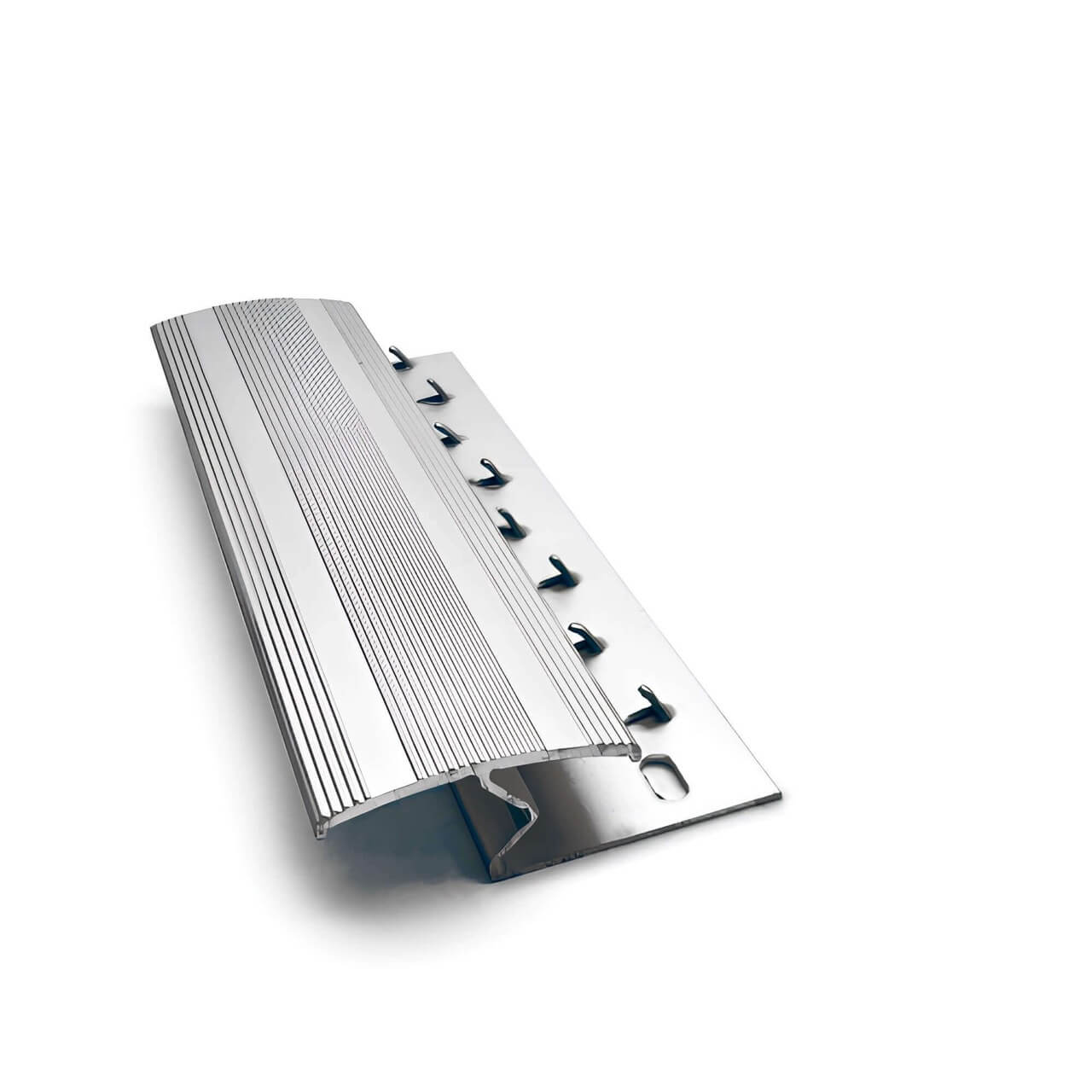
TGA Z Profile for carpets Matt Silver Metal threshold with ribbed surface design.

How it sits (DIY description):

  • The laminate/LVT comes up to the bar on the hard-floor side (leave the correct expansion gap for laminate).
  • The carpet from the top step/landing edge is stretched up and tucked/clamped into the Z-bar section. In practice the carpet needs to come onto the landing just enough to be trapped by the bar (it’s not a big overlap, just the finished edge).

Important: This is a transition bar for a carpet-to-hard-floor join on a flat edge. If your hard flooring will form the exposed top step edge (i.e. it runs right to the drop), you’ll normally want a stair nosing instead (see scenarios B/C).

Option 2: If the hard flooring runs right to the stair edge, use a stair-edge trim (see scenarios B/C)

Sometimes the landing flooring is installed right up to (or over) the stair opening, and you need a stair edging / stair nosing style trim for protection. In that case, jump to the relevant section below based on whether you’re using LVT or laminate.

Scenario B: Laminate/LVT on landing + hard flooring on the top step

When the hard floor goes onto the top step, you’ll usually want a proper stair nosing / edge trim to protect the front edge of the step and create a cleaner visual line.

If you’re using LVT (3mm): purpose-made LVT stair-edge options

We stock several options that accommodate 3mm LVT at the stair edge:
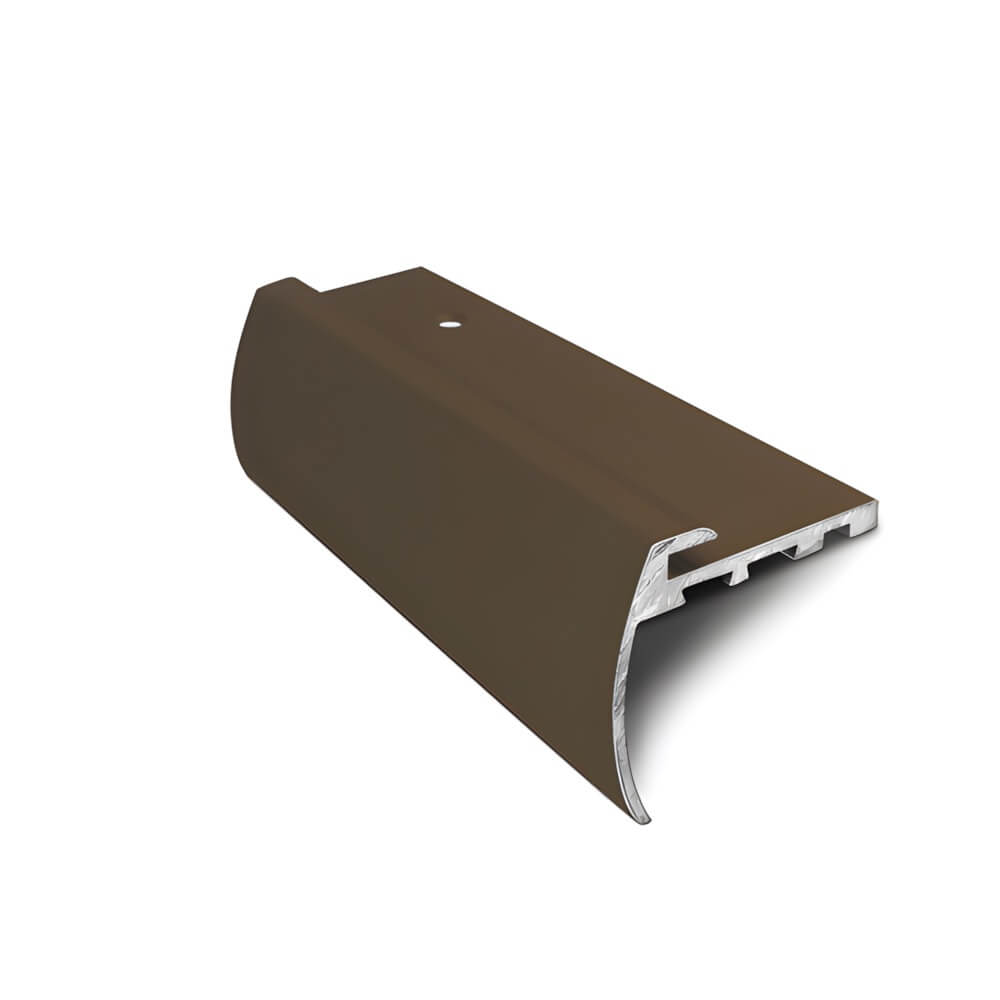
aluminium vinyl nosing tvb 3mm 5mm lvt curved edge step profile

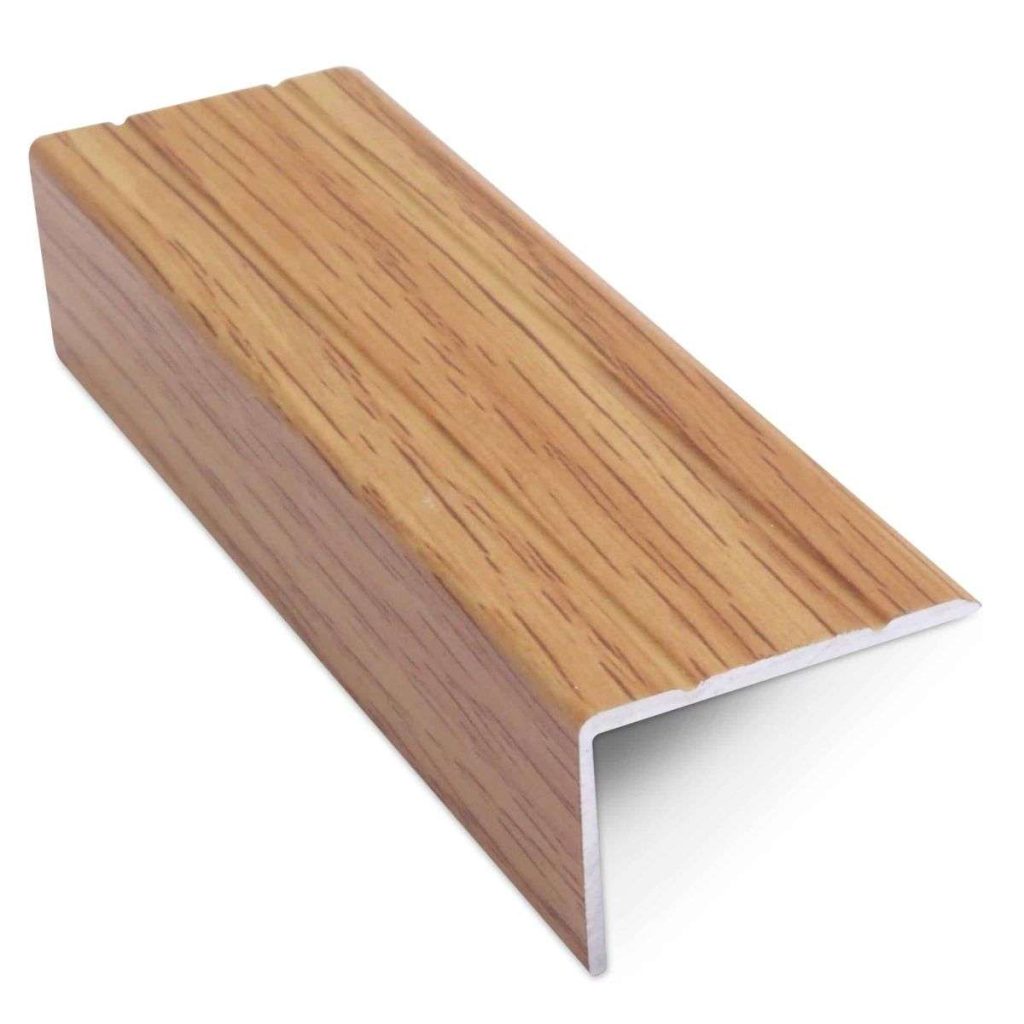
If you’re using laminate (or thicker than 5mm): retro-fit L-shaped stair nosing

If your flooring build-up is thicker than LVT (common with laminate), our practical option is a retro-fit L-shaped stair nosing style profile:

Note: We don’t currently stock a dedicated “thicker than 5mm” LVT stair-edge trim in the same TV range in those cases, many DIYers use a universal angle / L-shaped nosing solution like NAS.
nas.40 2 scaled 2 3.jpg

Scenario C: LVT on the stairs as well as the landing (3mm LVT)

If you’re fitting 3mm LVT on stairs, you’ll typically want:

  • a front edge finish on each tread (stair nosing)
  • sometimes a neat finish at the internal corner where tread meets riser (internal angle)

Option 1: TVC LVT stair nosing edge profile (for 3mm flooring)

Option 2: TVI LVT internal stair angle (for 3mm flooring)

Quick DIY fitting tips (for a neater, safer finish)

  • Dry fit first: cut and test your trim before removing any adhesive backing or drilling.
  • Mind expansion gaps: laminate especially needs the manufacturer’s expansion allowancedon’t lock the floor solid with a trim.
  • Choose the right fixing method: some profiles are supplied pre-drilled with screws/plugs, others are self-adhesive. In high-wear areas like the top step, secure fixing matters.
  • Keep the top step safe: a trim should protect the edge, not create a raised lip that catches toes.

Related guides

Not sure which option you need?

If you’d like us to double-check before you order, email [email protected] or call 01558 507007.

To help us recommend the right stair nosing or transition strip, please include:

  • what flooring you’re fitting (LVT / laminate)
  • the thickness (3mm / 5mm / other, including any underlay)
  • whether the hard flooring is on the landing only or also on the top step / stairs
  • a quick photo of the top step/landing area (if possible)
Disclaimer

This blog post is for general information only. All information on this site is provided in good faith, but we make no representation or warranty of any kind, express or implied, as to the accuracy, adequacy, validity, reliability, availability or completeness of any information on this site.

We are not liable for any errors or omissions in this information nor for the availability of the information. Any action you take upon the information in this blog is at your own risk, and we will not be liable for any losses or damages in connection with the use of our blog.
ecopow Limited Trading as Express Nosings © 2026 All rights reserved
Company No. 07247540 | VAT: 466137382