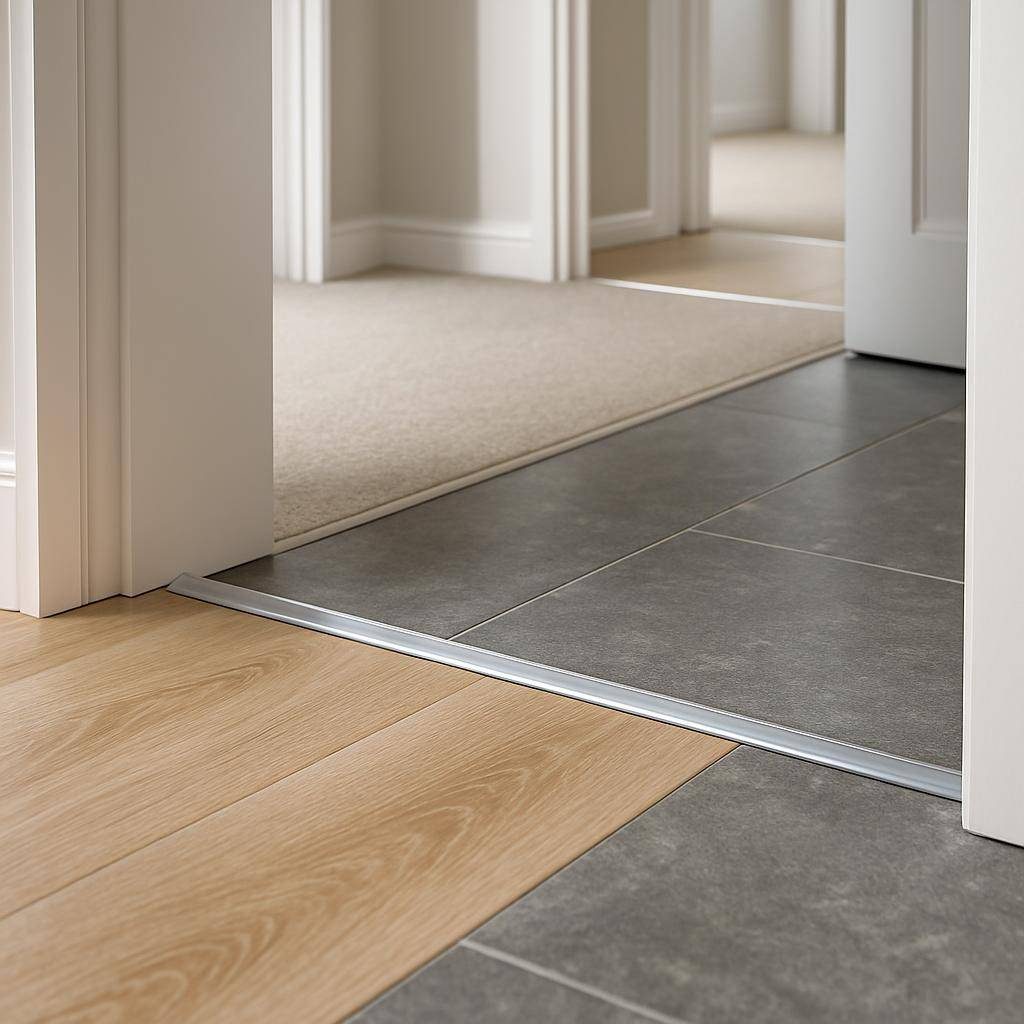
Choosing the right floor transition strip (also called a threshold strip or threshold bar) is mostly about three things: the two flooring types you’re joining, the height difference between them, and how you plan to fix the strip in place. This guide walks you through the most common transition scenarios-so you can pick a strip […]
Choosing the right floor transition strip (also called a threshold strip or threshold bar) is mostly about three things: the two flooring types you’re joining, the height difference between them, and how you plan to fix the strip in place.
This guide walks you through the most common transition scenarios-so you can pick a strip that looks tidy, sits safely underfoot, and lasts.
Before you choose a profile, measure:
If you need a general overview of the types available, browse our Transition Cover Strips category to see common profiles and widths.
Below are the most common floor-to-floor combinations. In each case, you’re usually choosing between a same-height cover strip (for minimal level changes) or a ramp/reducer-style transition (when one floor sits higher than the other).
If both floors finish at roughly the same level, a simple T-profile/dividing strip is often the cleanest solution. For example, our EDA Aluminium Dividing Strip (T-Section) is designed for same-level joins and helps protect the edge of both floor finishes.
Where one floor is slightly higher than the other, look for a reducer/ramp profile that bridges the step safely so there’s no sharp lip to catch toes, socks, or wheels. A good example is the TAS Self Adhesive Ramp Transition Strip 50mm x 15mm, which is designed specifically to smooth out small level changes.
If you’re primarily covering an expansion gap (rather than bridging a level change), choose a cover strip wide enough to hide the gap cleanly on both sides. If you want a lower-profile look, our Fast Fit Slimline Threshold Cover Strip 40mm is a popular option for neat, minimal coverage.
For a classic metal cover strip that works across many common doorway situations, see the Premier 38mm Coverstrip. It’s a straightforward choice when you need a durable threshold strip to cover a joint and protect exposed edges.
If drilling isn’t possible (underfloor heating, delicate tiles, rentals, etc.), a self-adhesive threshold strip can be the safest route-as long as the subfloor is clean, dry and flat. For example, our Self-Adhesive CAS 38mm Euro Cover Strip is designed for quick fitting across common floor types.
Fixing method matters almost as much as profile choice:
If you know your two flooring types and the height difference, you’re already 90% of the way to choosing the right floor transition strip / threshold strip.
If you’re between two options, choose the profile that gives the best coverage and the safest edge (no sharp lip and no rocking underfoot).